


To lift a machine, a vehicle or a heavy load, the hydraulic jack remains a widely used solution. However, when the available space under the load is very limited, access is difficult, the ground is soft, or the equipment needs to be easily transported, an air lifting bag can be a particularly interesting alternative.
Both technologies serve the same purpose, but their design and operating conditions differ. So, when should an air lifting bag be preferred ?
A hydraulic jack uses pressurized fluid to actuate a rigid piston and lift the load. It provides guided movement and is available in a very wide range of capacities.
An air lifting bag, on the other hand, operates using compressed air. It is positioned under the load while deflated, then inflation progressively generates the force required for lifting.
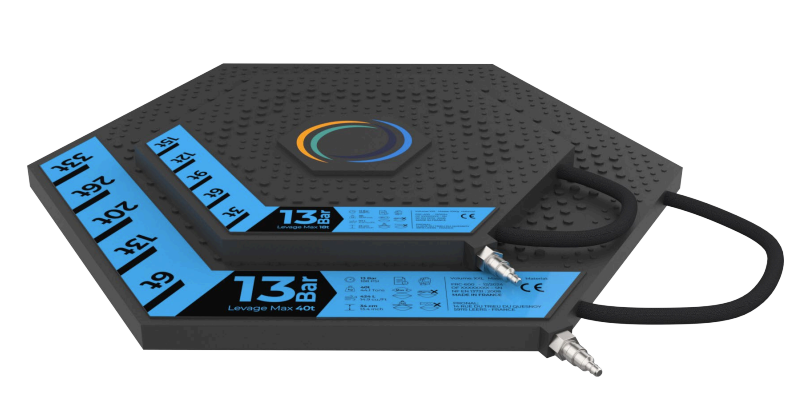
Its main advantage lies in its low insertion height before inflation. The Pronal CLT high-pressure air lifting bags have, for example, an uninflated thickness of 25 mm, with lifting capacities ranging from 1 to 65 tonnes depending on the model.
| Criterion | Hydraulic jack | Air lifting bag |
|---|---|---|
| Structure | Rigid | Flexible |
| Energy source | Hydraulic | Compressed air |
| Insertion height | Varies depending on the model | Very low depending on the bag |
| Transport | Varies | Compact when deflated |
| Contact surface | Generally localized | Larger depending on the bag |
| Load holding | Possible with certain systems | Requires suitable cribbing |
The choice therefore does not depend solely on lifting capacity. The available space, required lifting height and access conditions also play a decisive role.
Why use an air lifting bag instead of a jack ?
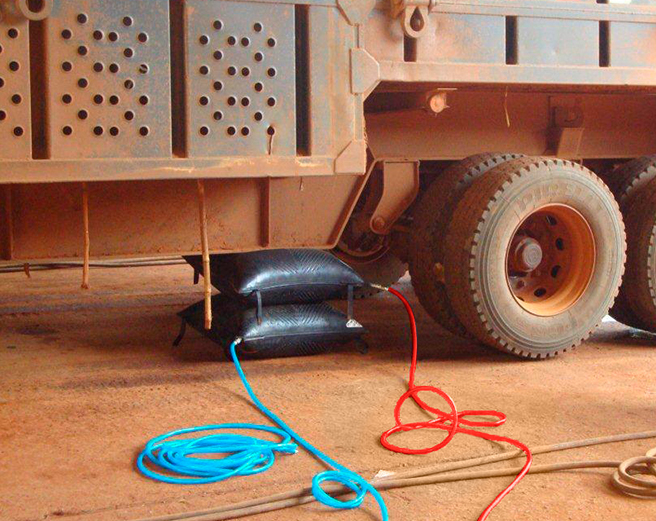
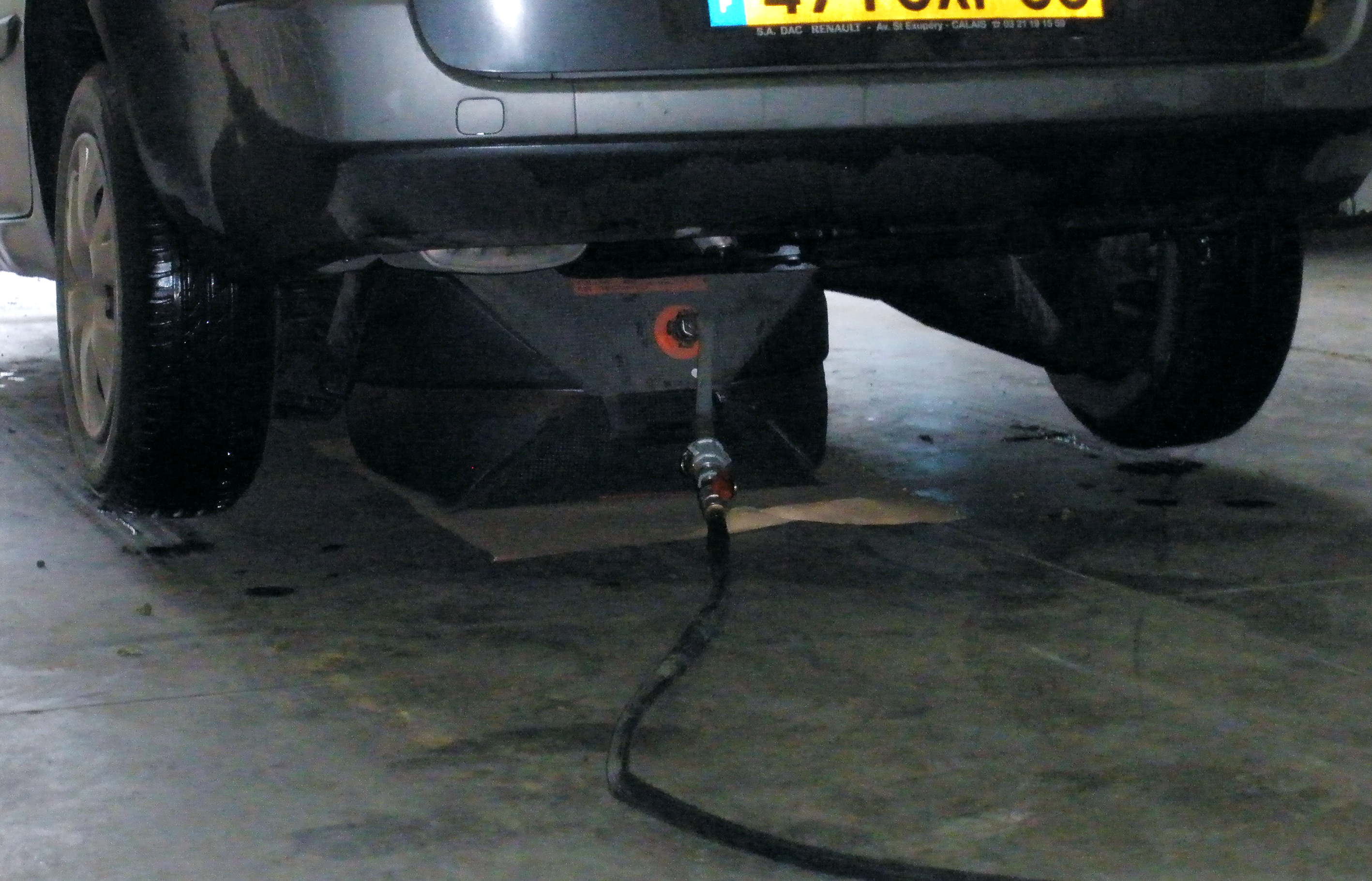
When deflated, an air lifting bag takes up very little space. This characteristic makes it easier to transport, store and position on sites where access may be restricted.
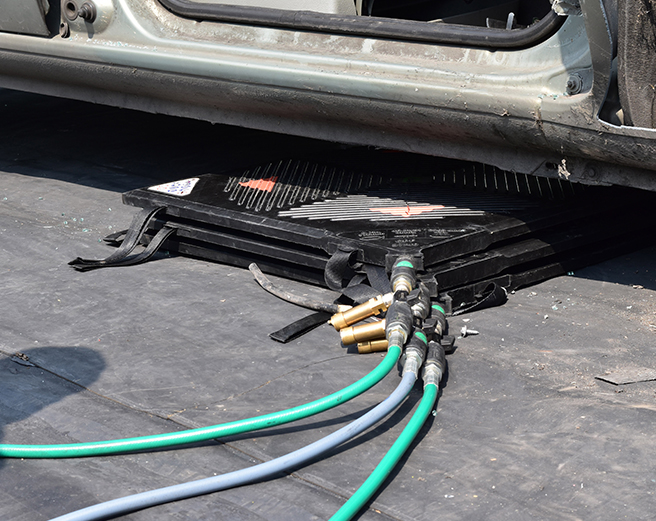
Depending on the application, different technologies can be used. Our high-pressure range with the CLT covers most lifting applications. The FRC range is mainly intended for fire and rescue services. The CPF provides load stability. Stacking the air lifting bags increases the lifting height to meet a wide range of applications.
Two other low-pressure ranges complete our product offering. The CBP and CLC provide a constant load throughout the lifting height, which can reach up to 1 m.
To compare these different technologies and their applications, see our complete guide to Pronal air lifting bags.
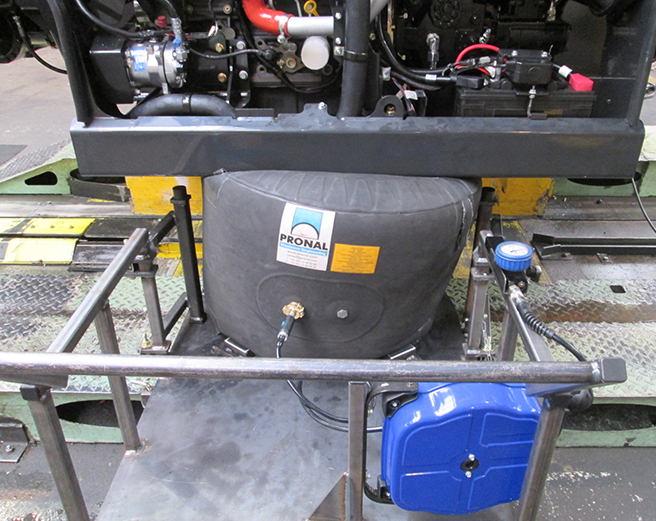
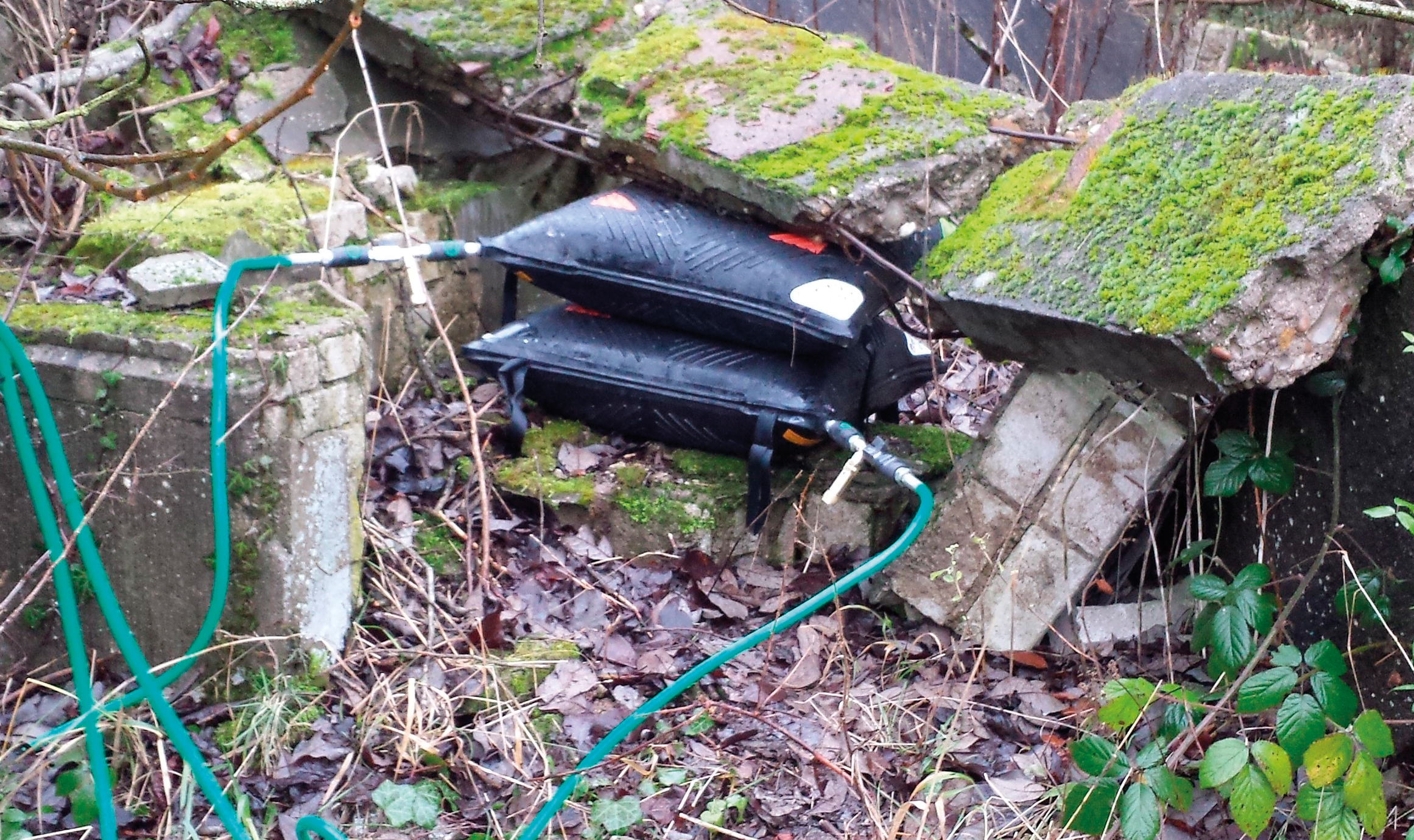
Remote operation is possible
The air lifting bags are connected to an air supply and controlled using a control system. The operator can therefore progressively control inflation from a certain distance away from the load.
In the case of the 25-tonne machine tool, for example, the four air lifting bags were remotely controlled using two control manifolds.
How to choose between a hydraulic jack and an air lifting bag ?
An air lifting bag does not systematically replace a hydraulic jack. A hydraulic system may remain more suitable when highly precise guided movement or prolonged mechanical support of the load is required.
An air lifting bag, however, becomes particularly useful when :
- the available space under the load is limited
- access to the lifting point is difficult
- the equipment needs to be compact and transportable by one person
- several lifting points need to be coordinated simultaneously
- the shape or surface is not suitable for rigid lifting equipment
- the operator needs to remain away from the load being lifted
Before choosing a solution, it is therefore important to consider the weight of the load, the available space, the required lifting height and the working environment.
Lifting must also be distinguished from supporting the load. When work is carried out underneath a lifted load, a suitable cribbing or load-support system must be provided.
To go further and determine which technology best meets your needs, discover the different Pronal air lifting bags and their applications.
The air lifting bag as an alternative to hydraulic jacks in confined spaces
The hydraulic jack remains a standard solution for many lifting operations.
However, when the available space becomes limited or access becomes difficult, the air lifting bag provides a different solution.
Its main advantage lies in the combination of low deflated thickness, high lifting capacity and ease of positioning.
Pronal offers several ranges of air lifting bags suitable for the needs of industry, construction, rescue services, mining and quarrying and aeronautics.